
 |
 |
 |
 |
 |
 |
 |
 |
 |
Crack recognition in sheet-metal processing Specifications
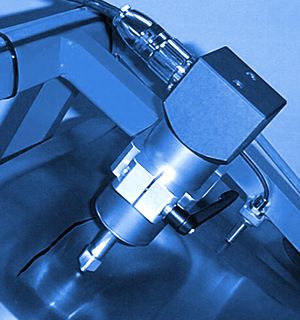
When sheet processing reaches the limits of plasticity of the material, or when the sheet metal has faults, deep drawing can lead to the formation of thin patches or cracks. After processing, it is important to check the quality of components that are liable to suffer from such problems. The non-destructive crack recognition system identifies necking and cracks in critical areas of a component. This is done by positioning up to four test sensors (MagSens®) at such positions. An impulse hammer automatically impacts on each component and measures the excitation impulse. By means of algorithmic comparisons, the resultant signal can be used to draw conclusions about the local rigidity and to identify faults in the component. The test result is shown either acoustically (a horn) or visually (a green or red signal), or is passed on directly to the plant control system.
The objective of this crack recognition system is firstly to avoid defective components from remaining in the production chain. Secondly, the continual measurement of each component means that it is also possible to monitor the production process, and identify any problems arising from changes to the machines and tools used, or the way these are set up. The documentation of the test results also means that it is possible to provide evidence of the quality of each component if necessary, even many years later. Typical applications include:
|
 PDF 76
KB
PDF 76
KB